
Education
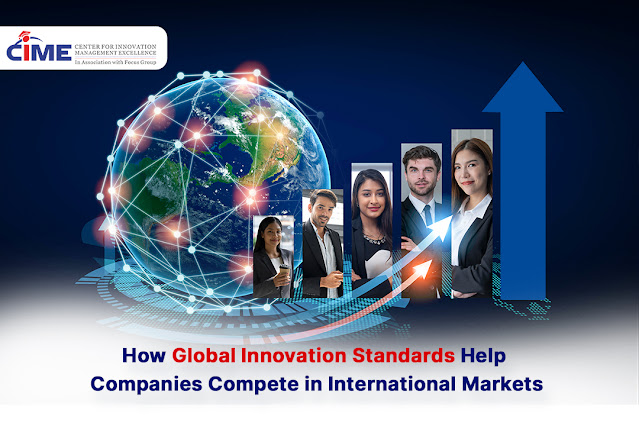
How Global Innovation Standards Help Companies Compete in International Markets
In today’s rapidly shifting global landscape, innovation is no longer a luxury—it is a survival strategy. Companies that want to compete internationally must be faster, smarter, and more adaptable than ever before. But innovation is not just about having a good idea. It requires structure, discipline, and a clear framework that guides teams from concept to commercial success. This is where ISO 56000 and other Globally Recognized Certifications play a transformative role. These standards help organizations build systematic innovation capability, reduce risk, improve efficiency, and stand strong in competitive global markets. When a company invests in an Innovation Management Certification, it signals to stakeholders that it follows global best practices and is committed to sustainable growth and long-term value creation.
1. The Growing Need for Innovation Standards in a Global Economy
Markets today are interconnected like never before. What happens in one part of the world impacts industries everywhere. Because of this, companies face increasing pressure to compete not only regionally, but globally. To survive in such an environment, organizations must develop products faster, streamline operations, introduce breakthrough solutions, and adapt instantly to market changes.
However, innovation without structure can lead to wasted resources, inconsistent performance, and high failure rates. This is why businesses worldwide are turning to ISO 56000, a global innovation standard that helps organizations approach innovation strategically and systematically. Unlike ad-hoc creativity, structured innovation allows companies to scale their ideas, measure progress, reduce risk, and bring new solutions to market with higher success rates.
Adopting a recognized framework provides a competitive advantage because it aligns innovation activities with a company’s long-term vision. When organizations follow global standards and hold Globally Recognized Certifications, they earn credibility, trust, and confidence from international clients, investors, and partners.
2. Understanding ISO 56000—The Global Framework for Innovation Excellence
ISO 56000 is part of the ISO 56000 family of innovation management standards that offer guidance on how to build, implement, and sustain an innovation management system. It covers key areas such as terminology, culture, strategy, processes, tools, and evaluation techniques. The goal is to help organizations innovate more consistently and competitively.
This standard provides universally accepted definitions and principles for innovation, ensuring that teams across departments—and even across countries—share a common understanding of what innovation means and how it should be executed. With this clarity, organizations can innovate faster and more effectively.
Companies that follow ISO 56000 benefit from:
A clear innovation roadmap
Stronger alignment between teams
Reduced waste and inefficiency
Improved decision-making
Faster time-to-market
Higher success rates for new initiatives
By adopting this global framework, companies demonstrate to international markets that their innovation processes are not random, but structured, strategic, and professional. This makes them more competitive, especially when exporting to countries that value process maturity and reliability.
3. How Global Innovation Standards Build Trust in International Markets
When entering foreign markets, trust matters. International buyers, investors, and partners prefer working with organizations that follow global standards. This is why Globally Recognized Certifications have become powerful assets for companies expanding into competitive markets.
Certifications in innovation management signal that a company:
Is committed to long-term innovation
Follows structured and ethical practices
Has reliable systems and processes
Can deliver consistently high-quality outcomes
Meets international expectations and benchmarks
In many industries—such as technology, manufacturing, aviation, defense, healthcare, and R&D—international partners evaluate companies based on such credentials before forming business relationships. Holding an Innovation Management Certification helps organizations build instant credibility and positions them as serious players in global markets.
For investors and stakeholders, these certifications offer assurance that the company has reduced its risk of failure by adopting proven innovation systems. In a global economy marked by uncertainty, this reassurance is invaluable.
4. Structured Innovation Leads to Better Products and Faster Market Growth
Innovation must convert great ideas into market-ready products. Without a structured approach, companies often struggle with delays, poor quality, inconsistent performance, or unclear decision-making. ISO 56000 certification helps organizations build a systematic, predictable innovation pipeline that accelerates growth.
With a globally aligned approach, companies can:
Identify customer needs more accurately
Use data-driven insights to build better solutions
Test and validate new ideas quickly
Reduce the cost of experimentation
Improve product quality and reliability
Shorten development cycles
This structured process helps companies launch products that meet international expectations. When businesses use innovation standards wisely, they gain the agility to adapt to real-time market needs, giving them a major advantage over competitors who rely on guesswork.
Companies with Innovation Management Certification stand out for their ability to transform ideas into commercially successful offerings. This is crucial for winning global market share, especially in industries where competition is growing rapidly.
5. Enhancing Organizational Culture Through Innovation Standards
A company’s innovation efforts are only as strong as its culture. ISO 56000 emphasizes the importance of building an innovation-driven environment that encourages curiosity, experimentation, collaboration, and continuous improvement. When employees at all levels understand innovation principles, they contribute more effectively.
Implementing innovation standards helps companies:
Break down silos between departments
Encourage cross-functional teamwork
Motivate employees to share new ideas
Build a safe environment for experimentation
Create accountability through structured processes
Promote a mindset of long-term growth and learning
Such cultural transformation is essential for competing in global markets. Companies with innovation-friendly cultures respond faster to opportunities, adapt better to change, and maintain higher productivity levels.
When organizations invest in building this culture through Globally Recognized Certifications, they gain a workforce that is aligned, empowered, and capable of driving breakthrough outcomes.
6. How Innovation Certifications Support Long-Term Strategic Growth
Innovation is not a one-time effort; it is a continuous journey. By adopting Innovation Management Certification programs and aligning with standards like ISO 56000, companies strengthen their long-term competitiveness.
These certifications support strategic growth by:
Building sustainable innovation ecosystems
Standardizing decision-making processes
Improving risk management
Supporting digital transformation
Encouraging investment in R&D
Strengthening customer trust and satisfaction
Organizations with strong innovation capability are also better positioned for mergers, acquisitions, and global partnerships. Many international companies prefer working with certified partners because it provides assurance of quality, stability, and forward-thinking leadership.
With global competition intensifying every year, businesses that invest in innovation certification gain a powerful edge that helps them grow, stay relevant, and lead the market.
7. The Future Belongs to Companies That Innovate Systematically
As technology and customer expectations evolve, companies must invest in structured innovation systems to stay ahead. Those that rely solely on intuition or ad-hoc efforts struggle to survive global competition.
ISO 56000 and other Globally Recognized Certifications offer a roadmap for building sustainable innovation capability. They help organizations create long-term value, strengthen stakeholder confidence, and position themselves as world-class players.
By adopting an Innovation Management Certification, companies demonstrate that they are serious about growth, excellence, and continuous improvement—qualities that are essential for success in international markets.
In an interconnected world, innovation is the engine of global competitiveness. But true innovation requires structure, discipline, and alignment with international standards. ISO 56000 provides the global framework companies need to innovate consistently and strategically. When organizations adopt global innovation standards and earn Globally Recognized Certifications, they gain credibility, trust, and a powerful competitive edge in international markets.
Pursuing an Innovation Management Certification is more than a learning achievement—it is an investment in the company’s future. It strengthens internal capability, accelerates product development, enhances leadership decision-making, and builds the resilience needed to thrive in global competition.
In the years ahead, companies that combine creativity with global standards will lead the world. Those that innovate systematically will not just compete—they will define the future of international business.
Ready to lead with structured innovation? Get in touch with CIMEPRO for ISO 56000 training and GIMI certification. visit www.cimepro.in or call +91 9589706358.